— Accountability
Fact Sheet.
Our results in numbers, from the field to your screen.
Key figures from the USG OHA emergency health and nutrition response in Sokoto, the FCDO/WFP resilience project in Sokoto and Katsina, and highlights from the Integrated Health Program. View them here or download them.
— Infographics
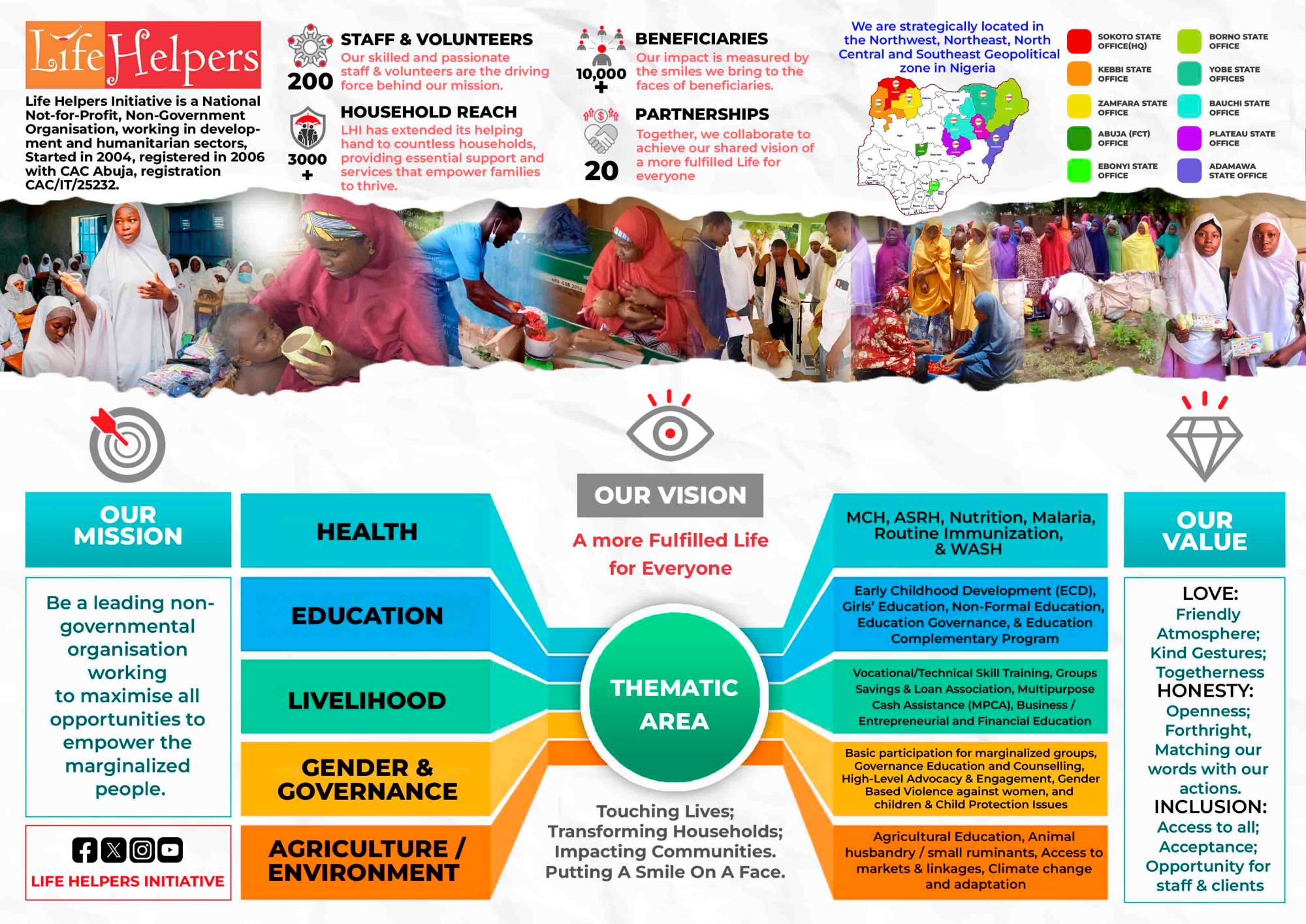
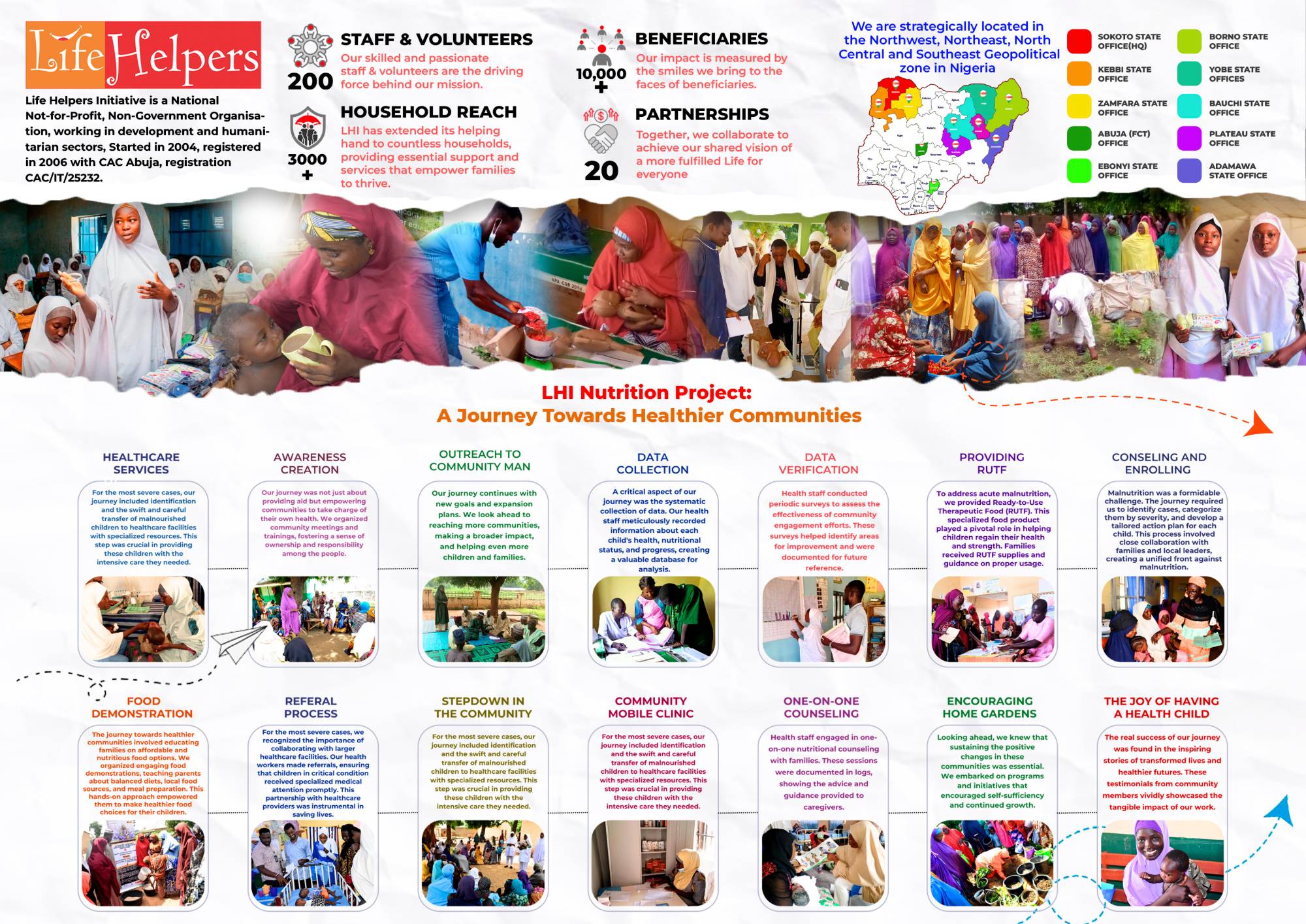
LHI at a glance.
Who we are, where we work, what we do, and how our nutrition project works step by step.
Health & nutrition
Integrated Emergency Health & Nutrition Response (Sokoto State)
Funded by the Office of Humanitarian Assistance (OHA), United States Government, in a consortium of IRC (lead) with ALIMA, COOPI, LHI and GISCOR. LHI led health and nutrition in Sokoto State across Goronyo, Rabah, Isa, Sabon Birni LGAs, May 2023 – June 2026. Life-of-award results.
109,225
Outpatient consultations
86.5% new cases
76,257
Children screened
For acute malnutrition, aged 6–59 months
9,614
Children treated for SAM
At Lajinge and Makuwana OTPs
5,635
Skilled deliveries
By trained birth attendants
Health services & referrals
9,550
ANC attendees (2+ visits)
Pregnant women
6,520
Newborns with postnatal care
3,591 girls · 2,929 boys, within 3 days
38,250
NCD consultations
23,376 female · 14,874 male
1,222
MHPSS consultations
1,073 female · 149 male
1,253
Referral admissions
To secondary and tertiary care
613
Emergency referrals
398 female · 215 male
- Malaria (confirmed)54,671 (66%)
- Diarrhoeal disease17,492 (21%)
- Acute respiratory infections10,443 (13%)
Part of 93,159 communicable disease consultations (85.3% of the caseload).
- Lajinge OTP5,112 (53%)
- Makuwana OTP4,502 (47%)
9,614 children: 4,455 boys · 5,159 girls.
- Recovered / discharged cured7,698 · 80.1%
- Defaulted298 · 3.1%
- Transferred to a stabilisation centre46 · 0.5%
Share of the 9,614 children admitted.
- Internally displaced people1,202,532 (65%)
- Host communities647,517 (35%)
1,850,049 people reached across Zamfara, Sokoto and Katsina.
47,565
Caregivers trained in Family MUAC
39,532 women · 8,033 men
500
Children in the Tom Brown programme
For moderate acute malnutrition
112
Mother Support Groups
1,680 women members
63.4%
Exclusive breastfeeding
Infants 0–5 months at supported facilities
10
Facilities supported
7 PHCs + 3 mobile/IDP clinics
58 + 57
Health workers trained / mentored
Nurses, midwives, CHEWs, technicians
56
Community nutrition mobilisers
54 women · 2 men
54
Adolescent mentors
27 female · 27 male
Source: Project Magazine Vol. 4, “Restoring Hope, North West Lives” (LHI, 2026), citing the IRC Nigeria BHA/OHA final report (720BHA23GR00216). Read the stories →
Food security & livelihoods
Resilience Building and Smallholder Farmers Support Project in Northwest Nigeria (Katsina and Sokoto)
Funded by UK aid (FCDO) through the World Food Programme (WFP), implemented by Life Helpers Initiative. Households received smallholder farmer support or cash-based transfers.
5,700
Households supported
Heads of household reached directly
37,050
Household members
Indirect beneficiaries
2 · 4 · 42
States · LGAs · wards
Coverage across Sokoto and Katsina
1,384
People with disabilities
24.2% of households supported
- Female-headed households1,657 · 29.1%
- Male-headed households4,043 · 70.9%
- Smallholder farmer (SHF) support70%
- Cash-based transfers (CBT)30%
- Host community4,807 · 84.3%
- Internally displaced (IDPs)830 · 14.6%
- Returnees63 · 1.1%
- Youth16%
- Adults51%
- Elderly34%
Rounded shares; totals may not equal 100%.
- Married78%
- Widowed17%
- Single3%
- Divorced2%
UK aid (FCDO) through the World Food Programme (WFP)
Implemented by Life Helpers Initiative
All our projects →Cash-based transfers
996
Women
58.2% of recipients
714
Men
41.8% of recipients
278
People with disabilities
16.3% of recipients
8
Average household size
292
Linked with NIMC
17.1% enrolled for a national ID
1,075
Linked with a bank
Taj Bank, Keystone Bank, Polaris Bank, UBA
- Host community84.2%
- IDPs12.7%
- Returnees2.1%
- Married64%
- Widowed27%
- Divorced5%
- Single4%
Smallholder farmers
661
Women farmers
16.6% of farmers
3,229
Men farmers
83.4% of farmers
0.3 ha
Average farm size
Hectares per farmer
- Maize2,052 (51%)
- Tomatoes1,181 (30%)
- Cabbage670 (17%)
- Pepper87 (2%)
Source: project progress dashboard, Resilience Building and Smallholder Farmers Support Project (FCDO/WFP), implemented by LHI.
Livelihood
Group Savings and Loan Associations (GSLA): Small Steps, Big Impact
Savings groups in Zamfara, Biu (Borno) and Yobe with ZOA · Secours Islamique France · Canadian Foodgrains Bank · World Renew. Members train for five days, meet weekly, keep their money in a three-lock savings box and share out at the end of each cycle.
Group Savings and Loan Association (GSLA), with ZOA, Secours Islamique France, Canadian Foodgrains Bank and World Renew
1 / 18- Gusau100 (28%)
- Talata Mafara90 (25%)
- Tsafe87 (24%)
- Anka79 (22%)
356 members in four LGAs, plus groups in 11 Biu communities and in Yobe.
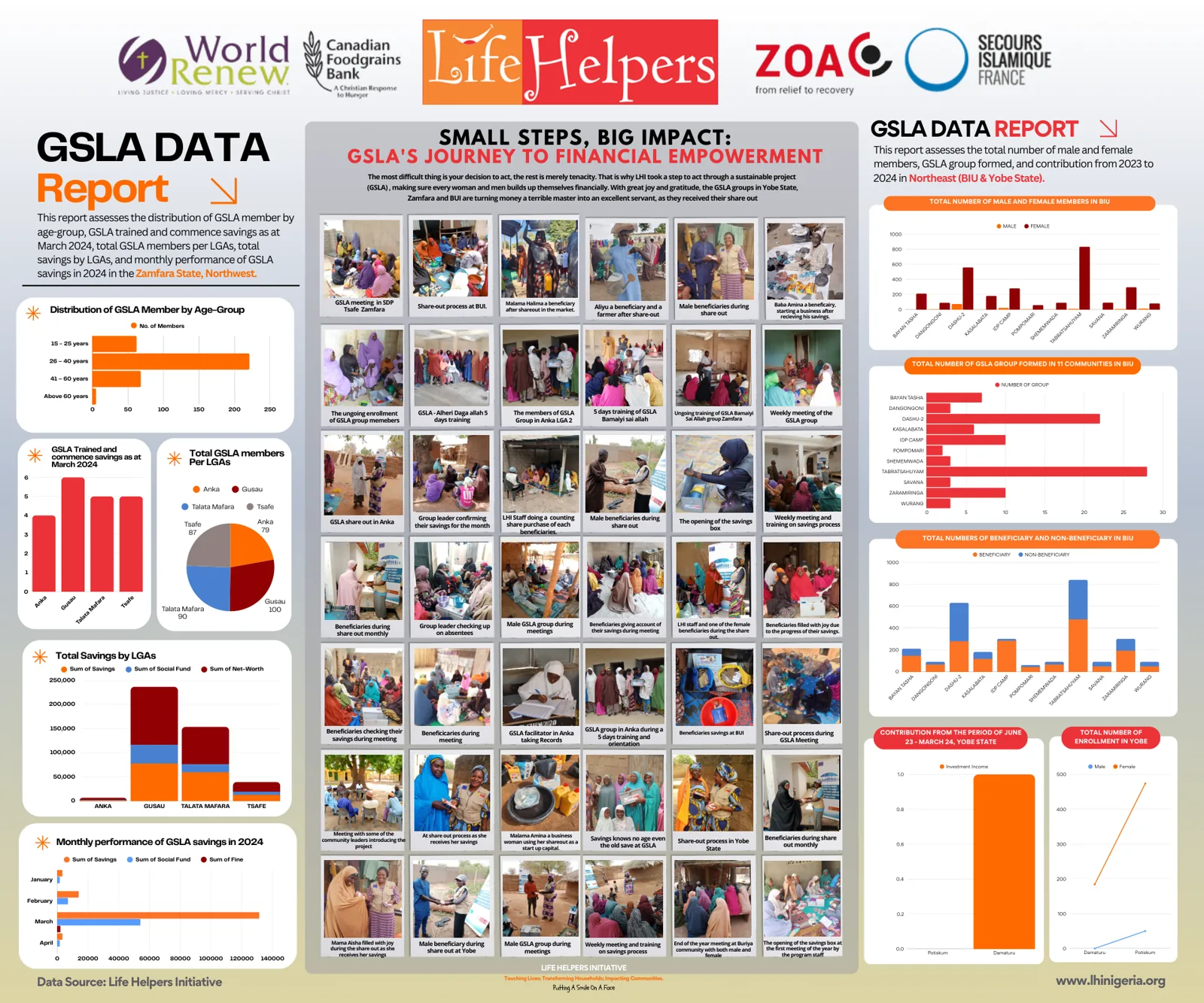 GSLA data report · open full sizeRead the story →
Food security & livelihoods
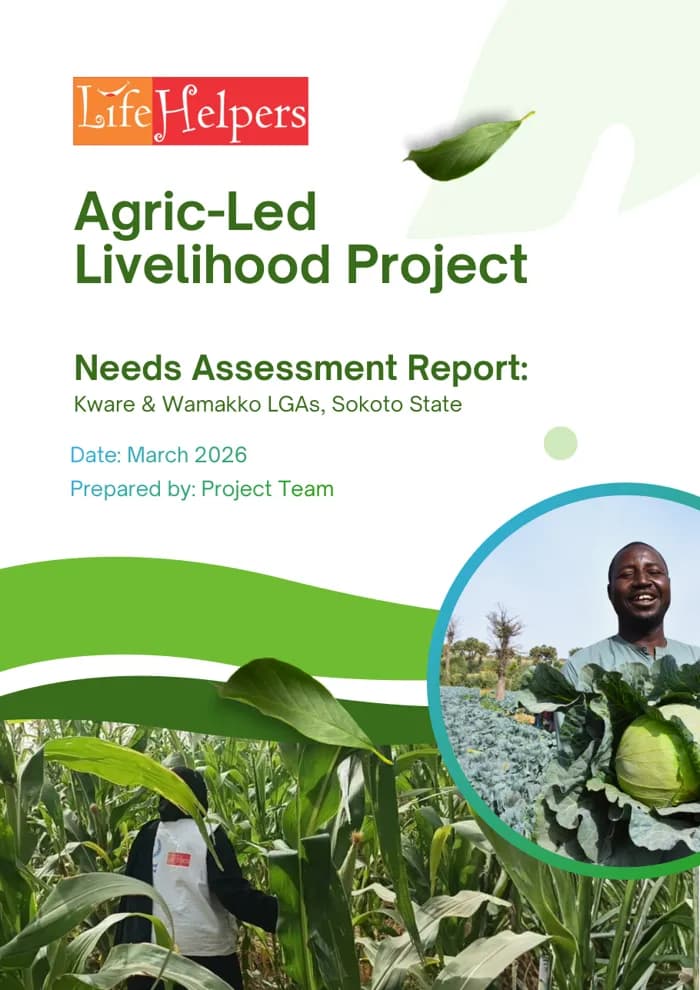
Agric-Led Livelihood Needs Assessment
Kware and Wamakko LGAs, Sokoto State, March 2026. Household surveys, focus groups and key informant interviews to shape LHI's agric-led livelihood project.
120
Households surveyed
60 in each LGA
70–80%
Household income from agriculture
1–3 ha
Typical farm size
Mostly rain-fed
- Kware: households engaged in farming82%
- Wamakko: households engaged in farming85%
- Improved irrigation for year-round farming
- Farmer cooperatives for collective bargaining
- Climate-smart agriculture and stronger extension services
- Value-chain development: processing and branding
- Microfinance for smallholders and women
- Rural roads, storage and youth-focused agribusiness
Health
Integrated Health Program: work done, achievements & success stories
Presented at the IHP Partners Summit: mentoring, supportive supervision and training of health workers on child health (IMCI), immunisation, malaria testing and nutrition in health facilities across IHP states, including Ebonyi State.
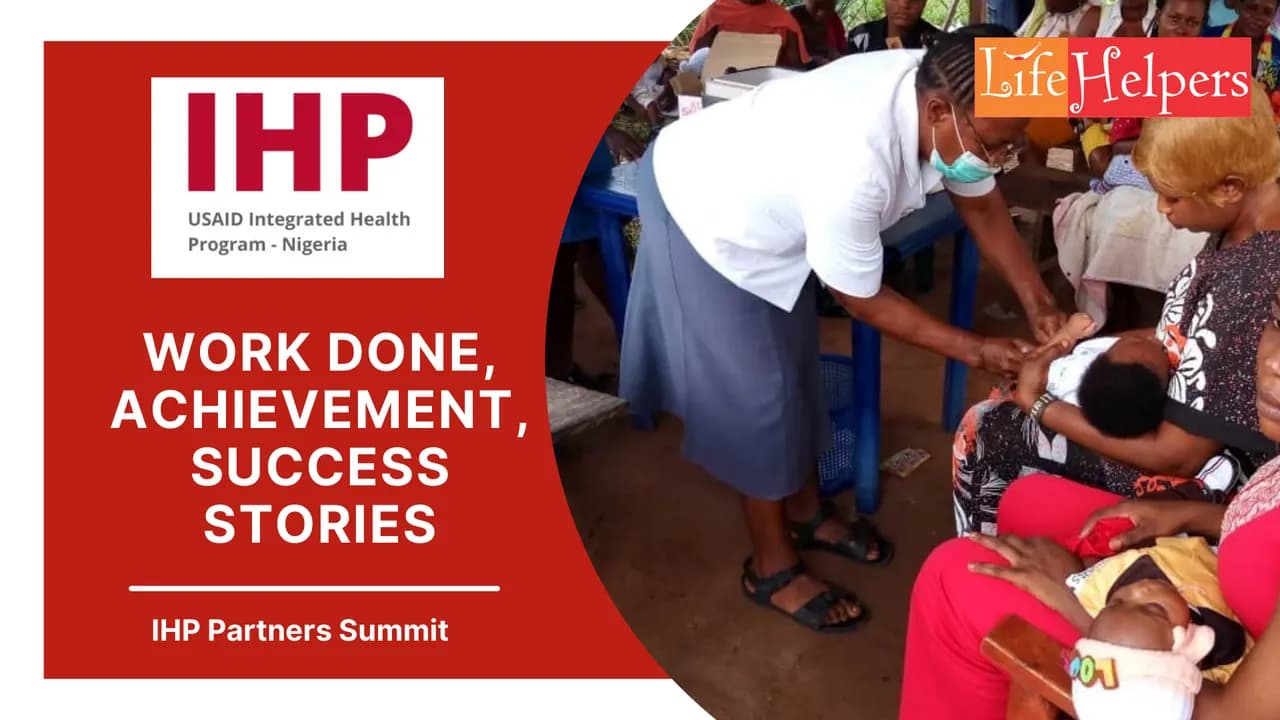
Work done, achievements and success stories: IHP Partners Summit
1 / 37